


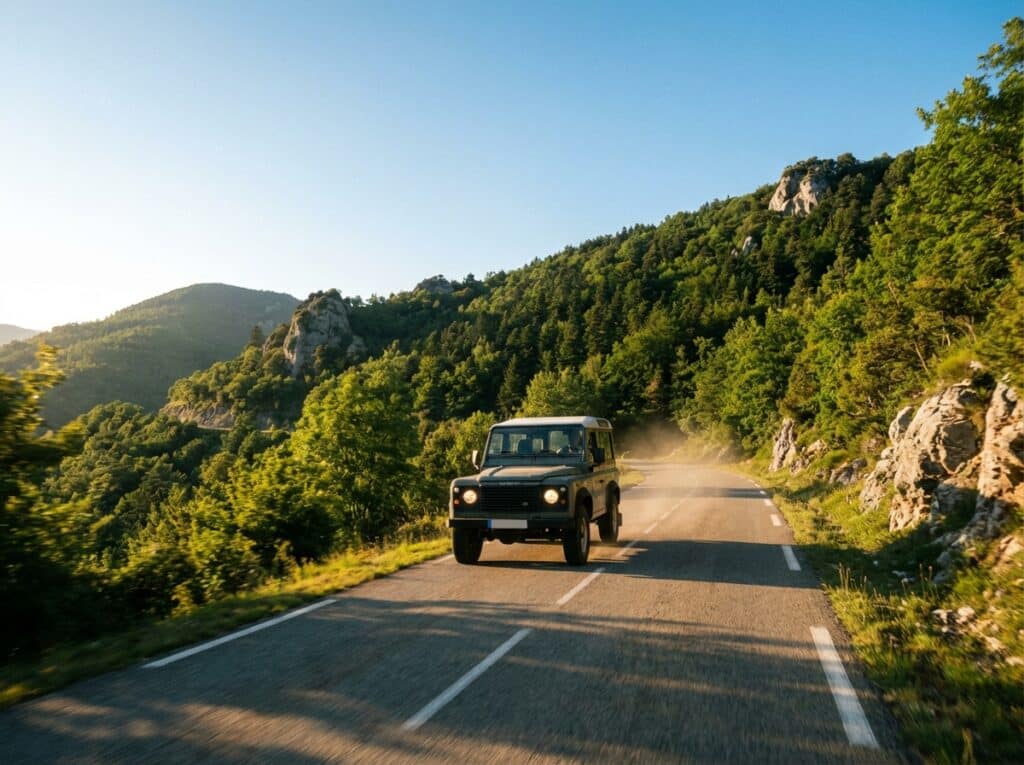
One of the great wonders of Catalonia is its amazing ability to radically transform the landscape over the course of just a few kilometers. Often, when people living in the metropolitan area think about finding unspoiled natural spots, lush forests, and a complete escape from the daily grind, they assume they have to plan exhausting, hours-long trips to the heart of the Lleida Pyrenees or cross the border into France.
However, the Pre-Pyrenees’ best-kept secret completely debunks this myth. Just over an hour and a half from the heart of the Catalan capital, there is a valley where the silence is broken only by the sound of water and the wind rustling through the leaves of the beech woods. If you’re planning your next getaway near Barcelona, the town of Vidrà (on the magical border between Osona and Ripollès) is the perfect destination.
In this article, we’re going to clear up all your logistical queries once and for all. Holiday stress shouldn’t start in the driver’s seat. As locals who make this journey all the time, we’ll explain in great detail how to get to Vidrà from Barcelona, the exact turn-offs you need to take so you don’t get lost, where to make the best stops for locally sourced food, and how to turn the car journey itself into the perfect start to your long-awaited holiday.
Key information and route map (Distance: Barcelona–Vidrà)
Before you get behind the wheel and switch on the sat-nav, let’s take a look at the actual figures. Any pre-trip anxiety disappears straight away when you’ve got the precise technical details in mind.
Technical summary of the trip
- Total distance: Approximately 105 kilometres (depending on whether you start from the Eixample, the north of the city or El Prat Airport).
- Estimated journey time: Between 1 hour 30 minutes and 1 hour 45 minutes in light traffic.
- Main route: 85% of the journey is on a comfortable two-lane highway (the C-17 toward Vic and Puigcerdà).
- Tolls: Great news for your vacation budget: the main route via the C-17 is completely free. There are no tolls to add to the cost of your trip, making it the most economical and direct option.
The Interactive Map
We recommend that you bookmark this page on your phone or open the interactive map above directly in your Google Maps or Waze app before setting off.
The exit from Barcelona and the C-17 Expressway (the express section)
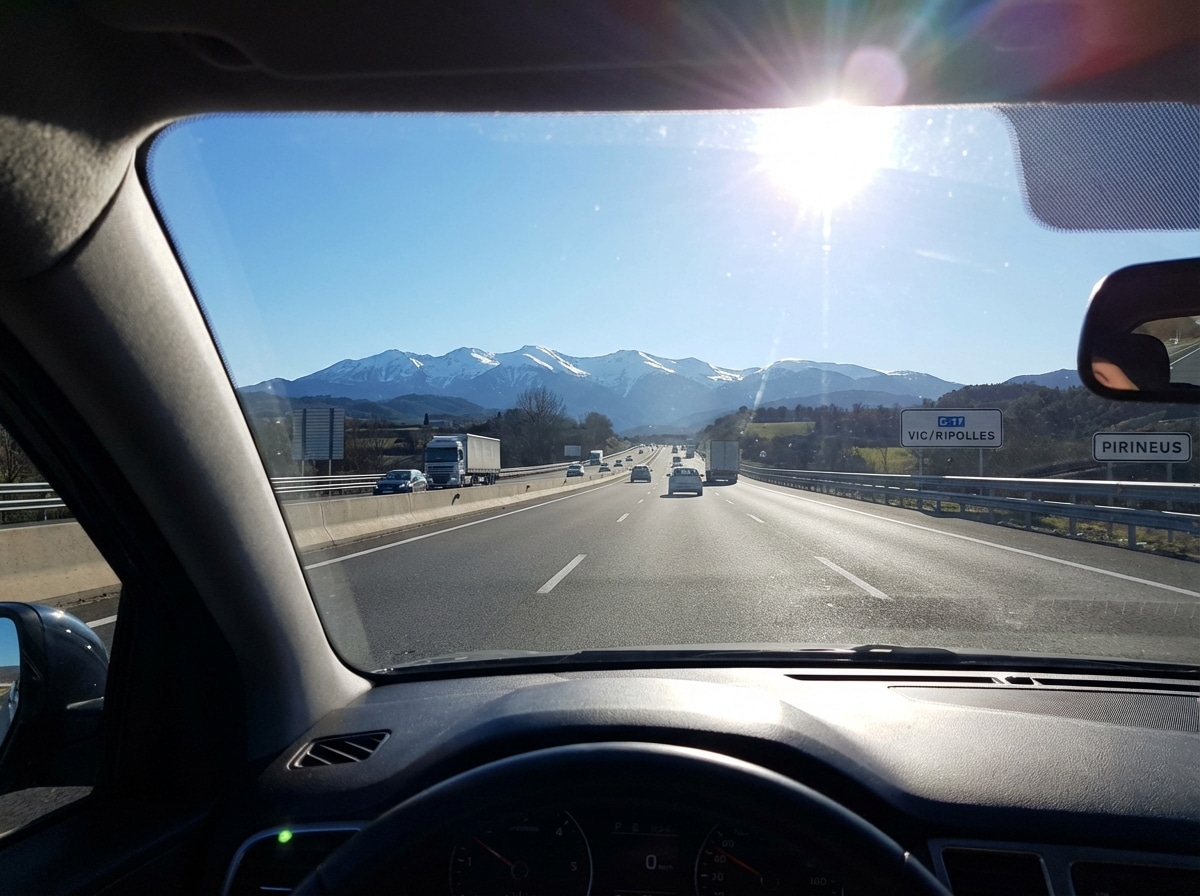
Figuring out how to get to Vidrà from Barcelona is very easy if you break the trip down mentally into three distinct sections. This first section is designed to get you out of the city as efficiently as possible.
Avoiding traffic: The best times to start your trip
If you’re heading out on a Friday afternoon for a weekend in the rural area, the stretch of the Meridiana Avenue or the Trinitat interchange leading out of Barcelona can be a bottleneck. Whether you take the C-33 or go straight along the Meridiana, your goal is to get onto the C-17 highway.
To avoid the infamous weekend “exodus,” we strongly recommend that you start your trip before 3:00 p.m. or after 7:30 p.m. If you manage to avoid that time slot, the drive on the C-17 will be a relaxed two-lane journey where cruise control will be your best friend.
The Vic Plain and the drastic change in landscape
As you leave Parets del Vallès and La Garriga behind, you’ll notice the industrial landscape giving way to the mountains. Once you pass through the Figaró and Centelles tunnels, you’ll officially enter the Osona region, and the horizon will open up before you, revealing the majestic Plana de Vic.

If you drive to Osona on an autumn or winter morning, you’re very likely to encounter the famous local weather phenomenon: the Pubilla. It’s a dense thermal fog that covers the entire low-lying plain. Don’t worry; as you continue climbing toward Vidrà, you’ll pass through this layer of clouds and emerge into a clear blue sky, leaving you with an unforgettable view.
Phase 2: Culinary and Cultural Stops Along the Way (The Route of Good Taste)
A getaway near Barcelona doesn’t begin when you check in at the farmhouse; it starts the moment you decide to relax in the car. If you’re not in a hurry to get there, we recommend turning the drive from Barcelona to Vidrà into a short sightseeing and culinary tour of the Osona region.
Where to buy the best cured meats in Vic
The C-17 highway runs along the outskirts of Vic, the capital of the region. If you’re a foodie, taking a 10-minute detour into the center of Vic is a must. Osona is world-famous for its cured meats.
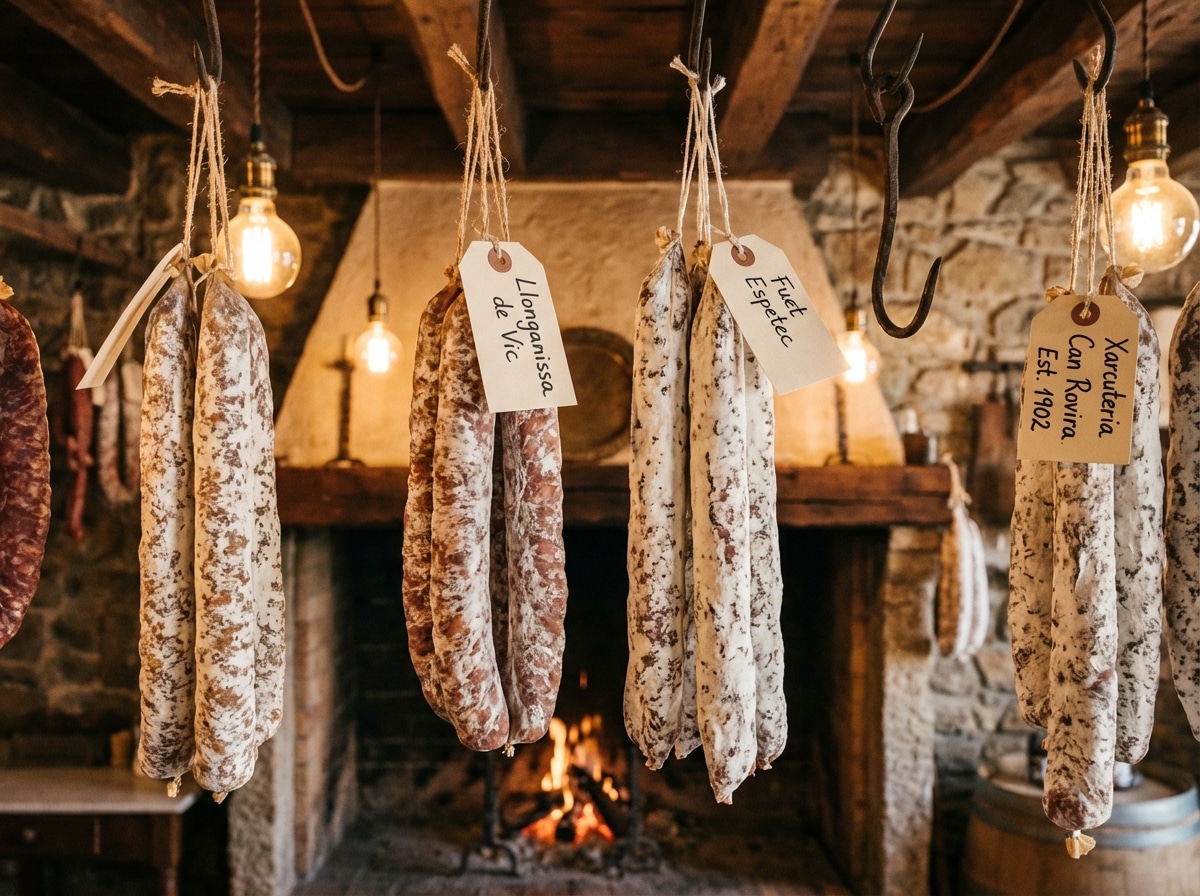
We recommend parking near the historic center and visiting century-old delicatessens such as Ca la Teresona (on Carrer dels Plateros) or the historic Casa Riera Ordeix. Buying an authentic Llonganissa de Vic (with Protected Geographical Indication), a tender fuet, or bull blanc for dinner in your rural apartment will take your culinary experience to the next level.
El Castell de Montesquiu
If you’re traveling with children and they need to stretch their legs before tackling the final curves, or if you’re simply history buffs, the Parc del Castell de Montesquiu is the perfect stop. It’s located just before our final turn-off toward Vidrà. This castle, whose origins date back to the 9th century, is surrounded by vast, free-to-enter gardens where you can stroll beneath monumental trees. It’s the perfect prelude to acclimating your body to the great outdoors.
Phase 3: The strategic detour at Sant Quirze de Besora
After passing Vic, Manlleu, and Torelló (continuing north on the C-17 toward Ripoll), the landscape opens up and the forests become much denser. You are about to enter the Pre-Pyrenees. This is the most challenging part of the route.
Please note Exit 82
You need to pay close attention to the GPS at this point. Take Exit 82 toward Sant Quirze de Besora / Montesquiu.
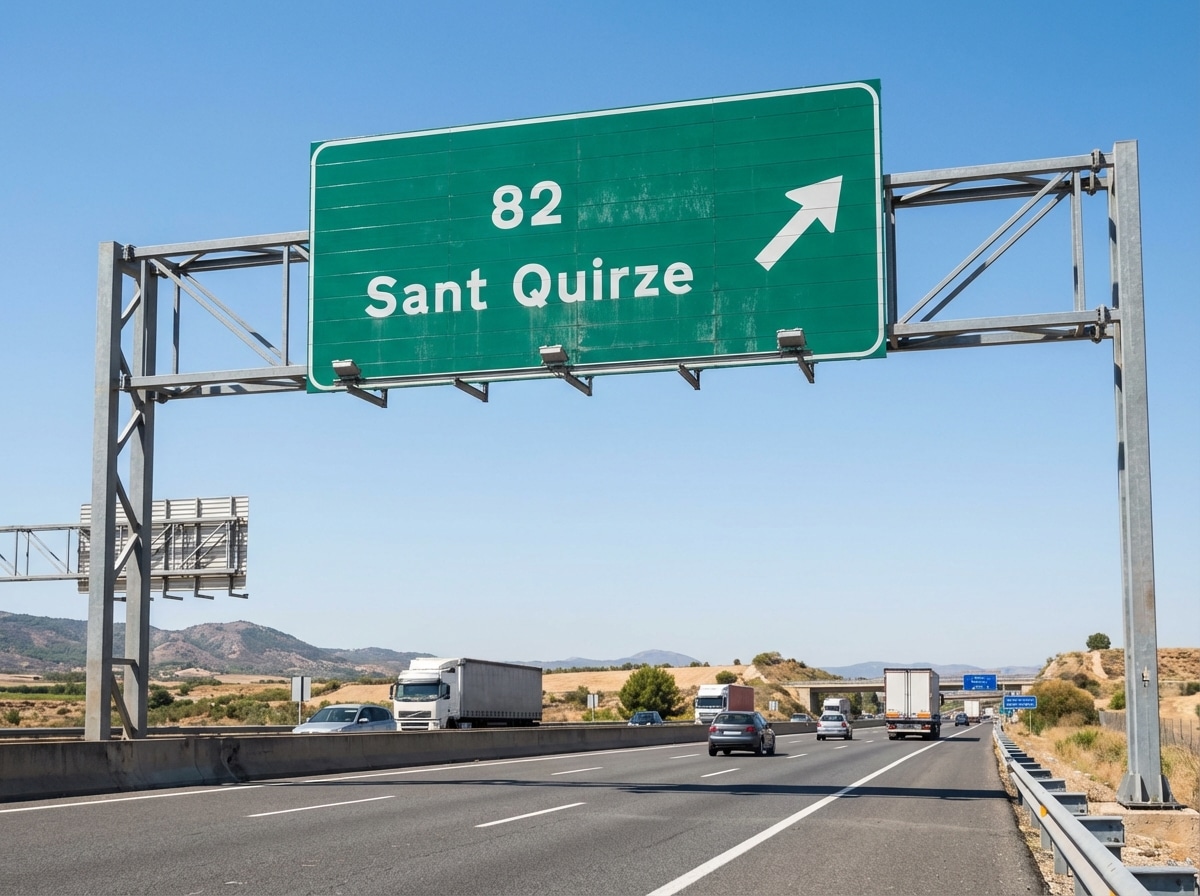
When you exit the C-17 highway at this exit, you’ll enter the town center of Sant Quirze de Besora directly. If you miss this exit, the next U-turn will force you to drive several extra kilometers toward Ripoll, so keep an eye out for the signs.
Your last local rest stop
Sant Quirze de Besora isn’t just a stopover; it’s the town that serves as a logistical “base camp” for the climb to Vidrà. It’s your last chance to stock up on supplies or fill your tank in comfort:
- Gas: Right on the C-17, near Sant Quirze, you’ll find the El Túnel gas station (NADA). If your tank is less than a quarter full, we recommend filling up here so you don’t have to worry about gas for the rest of the weekend.
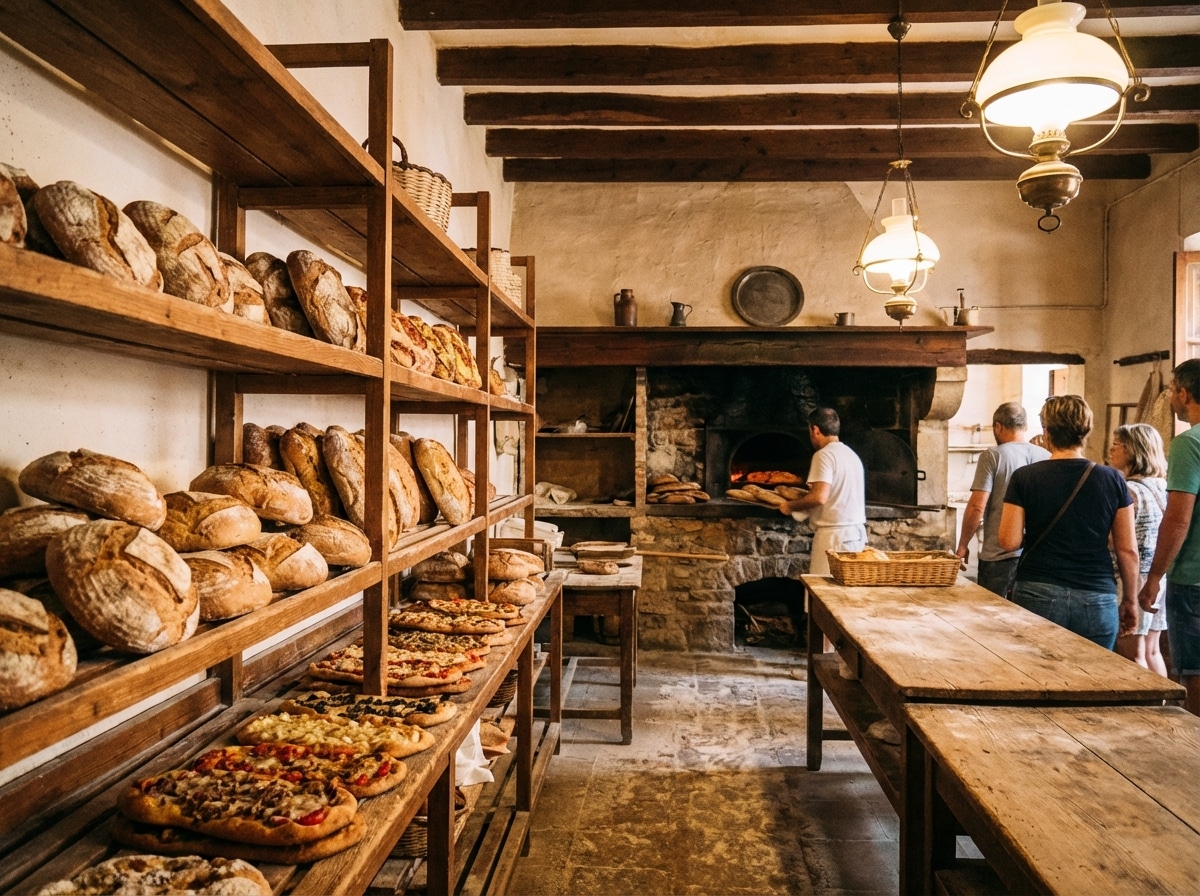
- The Real Deal: Before heading up the mountain road, pull over for a few minutes on Carretera de Berga and look for the historic Forn de Pa Torres. They’ve been baking bread the traditional way and making sweet baker’s cakes since the mid-20th century. Buying bread here for breakfast at Espai Vidrà is a decision you won’t regret.
- Local restaurants: If you arrive around lunchtime and’d rather head up to the farmhouse on a full stomach, local restaurants like Ca La Càndida or Restaurant Terrafoc offer spectacular set menus featuring traditional Catalan cuisine.
Phase 4: The Magical BV-5227 Highway (The Final Stretch)
From the center of Sant Quirze de Besora, as you cross the bridge over the Ter River, you’ll see clear signs pointing toward Vidrà. You’ll join the BV-5227 county road. This is where your immersion in nature truly begins.
Mountain Driving: Safety and Recommended Speed
It’s exactly 15 kilometers of gentle climbing to Vidrà. It’s normal for some city drivers to feel a bit apprehensive about mountain roads, but we want to put your mind at ease.
The BV-5227 is perfectly paved, wide enough for two cars to pass each other without any trouble, with clear road markings and guardrails where needed. Our top tip: slow down to 40–50 km/h, roll down the window, and take a deep breath. This road isn’t just a shortcut to the hotel; it’s one of the most scenic routes in Catalonia.
The Landscape Through the Four Seasons
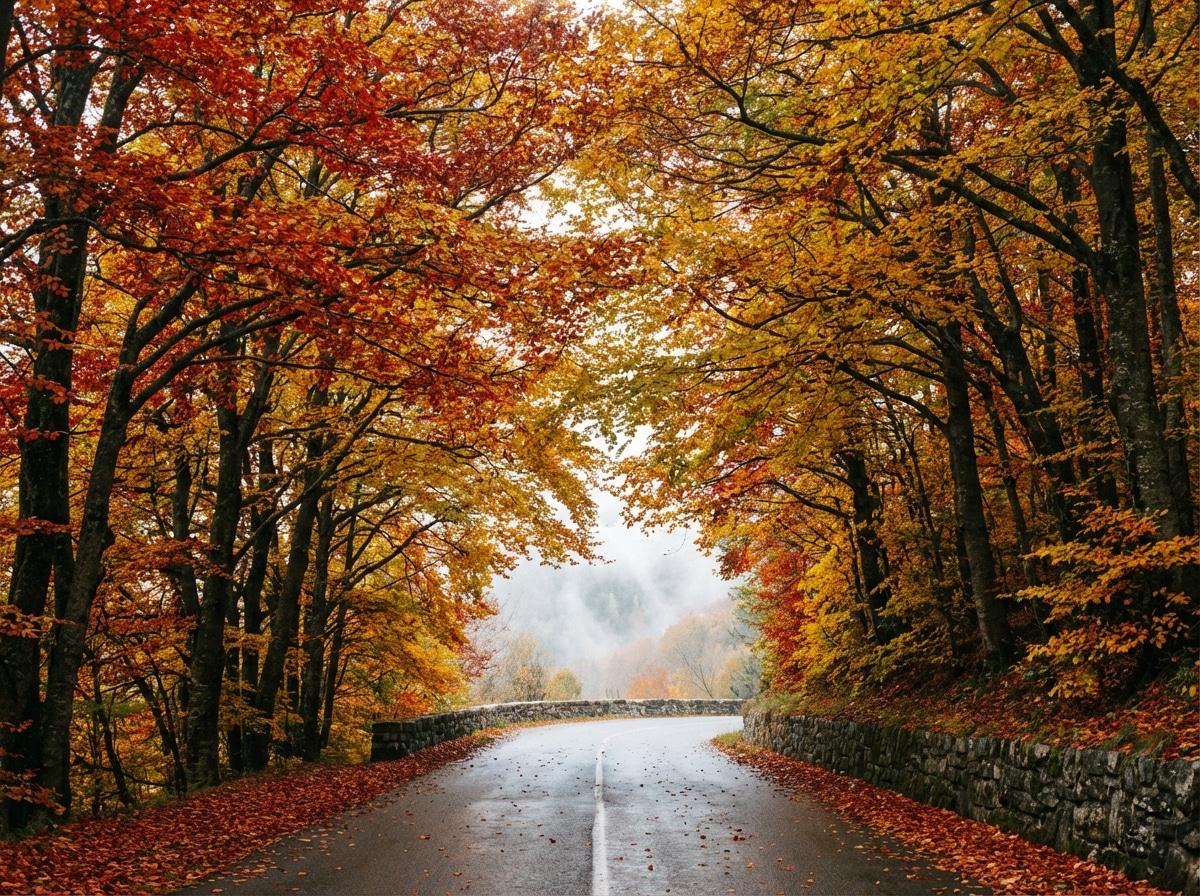
Traveling these 15 kilometers is a visual spectacle that changes dramatically depending on the date of your reservation:
- In the fall, you’ll walk through natural tunnels formed by the red, orange, and golden leaves of the centuries-old beech forests.
- In winter, if you’re lucky, you’ll see the snow-capped peaks of Puigsacalm peeking out from among the bare branches.
- In the spring, melting snow and rain swell the streams and waterfalls that line the road, creating an unbeatable natural soundtrack.
- In summer, the shade cast by the towering trees lowers the temperature by several degrees compared to the plains, offering you a cool, refreshing breeze.
Cell phone coverage and GPS
4G and 5G coverage is excellent along the entire stretch of the C-17 highway. However, as you enter the lush valley via the BV-5227, it’s completely normal for your cell phone’s data signal to fluctuate or disappear in some sections of dense forest. To prevent your GPS from losing its bearings, we recommend loading the route or downloading an offline map of the area just before leaving Sant Quirze de Besora. In any case, you can’t get lost: it’s a straight road all the way to the village.
Arrival at Espai Vidrà: Your Retreat Awaits You
Once you’ve rounded the last few gentle curves beneath the trees, the horizon will suddenly open up, revealing the lush green meadows of Vidrà, flanked by the imposing peak of Puigsacalm (1,514 meters above sea level). You’ll have covered the distance from Barcelona to Vidrà, leaving behind the stress of traffic lights, the noise of traffic, and work-related worries.
Where to park when you arrive
When you arrive at our estate in Espai Vidrà, you won’t have to worry about driving around looking for parking or paying for metered parking. We have a large private outdoor parking area within the grounds of the rural farmhouse, reserved exclusively for our guests. You’ll be able to unload your luggage comfortably and safely just a few steps from your room or rural apartment in Osona.
Check-in (The vacation begins!)
Our team will be waiting to give you a warm welcome, show you around the property, and hand you the keys to your getaway. Whether you’re coming to enjoy the privacy of our romantic rooms, spend a few unforgettable days with your family in the apartments, or host a large gathering at the fully rental farmhouse, we guarantee that the trip will be worth every minute.
Alternatives to Driving: Can You Get to Vidrà by Public Transportation?
Although we love exploring Osona by car because of the freedom it offers, we’re often asked if it’s possible to reach our accommodation using public transportation from Barcelona.
Combination of Train (Rodalies) and Regional Bus
The answer is yes, but it requires patience and careful planning. You can take the R3 line on the Rodalies de Catalunya (toward Puigcerdà/Ripoll) from central Barcelona stations such as Sants or Plaça Catalunya. The train ride offers wonderful views of the Congost River valley and takes about 1 hour and 45 minutes to reach the Sant Quirze de Besora train station.
The challenge begins at the station. To cover the remaining 15 kilometers to Vidrà, there is a regional bus service (operated by Sagalés/Teisa), but service is extremely limited, often with only one trip per day and no service on weekends. The other option is to book a local taxi service from Sant Quirze well in advance.
Therefore, to fully enjoy the region, explore the nearby villages of Rupit, or head to the starting points of the hiking trails without being tied to a strict schedule, we strongly recommend traveling by private car or rental car.
Frequently Asked Questions (FAQ) About Driving to Vidrà
To make sure there are no unanswered questions before you start your car’s engine and head out on your charming rural getaway, we’ve answered the most common questions from our guests:
Is it mandatory to use snow chains in the winter?
Generally speaking, no. Although Vidrà is located at an altitude of nearly 1,000 meters and experiences occasional snowfall between December and March, the local road maintenance service (snowplows) is extremely fast and efficient, clearing the BV-5227 road and spreading salt first thing in the morning.
Only in the event of an active snowstorm (Meteocat alerts) at the exact time of your trip would it be advisable to carry snow chains in the trunk as a precaution.
Does the uphill drive make the kids carsick?
The last 15 kilometers of the route to Vidrà consist of continuous curves, as it is a mountain road. If you have children or passengers who are prone to motion sickness, our best advice is for the driver to navigate the curves as smoothly as possible, avoiding sudden braking, and keeping the cabin well-ventilated.
Giving a child Biodramina 30 minutes before taking the detour at Sant Quirze de Besora usually ensures a completely smooth and trouble-free end to the trip.
Are there electric car chargers in the town of Vidrà?
Ultra-fast charging infrastructure is still under development in the most remote villages of the Pre-Pyrenees. Currently, there are no high-capacity public charging stations installed on the streets of Vidrà.
Therefore, if you’re traveling in a fully electric vehicle, we strongly recommend using the Endesa X or PowerGo charging stations located in the city of Vic (in the shopping district or near the hospital) or in Sant Quirze de Besora, to ensure you arrive at the farmhouse with plenty of range left for the return trip or for day trips.
What time does it get dark on the mountain road?
Due to the density of the beech forest and the valley’s topography, it tends to get dark on the BV-5227 road 30 to 45 minutes earlier than on the plains around Vic or Barcelona.
If you’re traveling in the fall or winter, we suggest starting the climb from Sant Quirze before 5:00 p.m. so you can enjoy the beauty of the landscape in natural light and drive with better visibility.
What should I do if I break down on a local road?
If you get a flat tire or break down in the final 15 kilometers, don’t worry. Despite the sections with less coverage, the BV-5227 is used daily by residents of Vidrà, livestock farmers, and the postal service, who won’t hesitate to help you contact your insurance company.
In any case, always park your vehicle as close as possible to the right shoulder and mark it with the required warning triangles or V-16 lights.
